
Home › Locking Stitch Markers
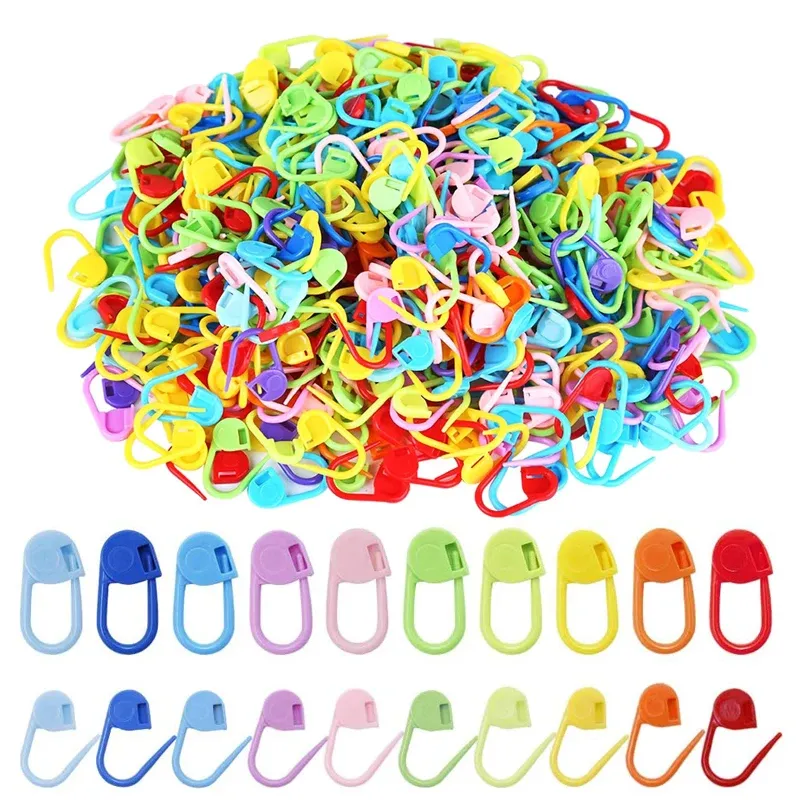
Locking Stitch Markers: the Clasp Is the Whole Product
Removable is easy — anything falls out. Locking is the hard part, and it is exactly what these 50 clips are built to do until you say otherwise.
Locking, removable, split ring, bulb pin — what actually differs
The distinction sounds pedantic until a marker leaves on its own schedule. A split ring that worked its way out of a lace repeat does not announce itself: you discover it two rows later when the repeat drifts and there is nothing anchoring your count. The whole value of a fabric marker is that its presence is guaranteed — a marker that might be there is worse than no marker, because you trust it.
That is why every marker we sell locks. The clip passes through the stitch, the pin seats into a molded catch, and the marker becomes part of the fabric until you flex it open. Between the locked state and the smooth, coil-free profile, there is no failure mode left: it cannot fall out, and it cannot chew the yarn on the way in or out.
Where do the pretty markers fit in this taxonomy? Lobster-clasp charm markers — the kind on our enamel charm sets — are locking markers too: the spring gate on the clasp is a lock. They trade a little bulk for a lot of charm, which is why crafters run both: a workhorse 50-pack in the notions tin, one charm set living on the current showpiece project.
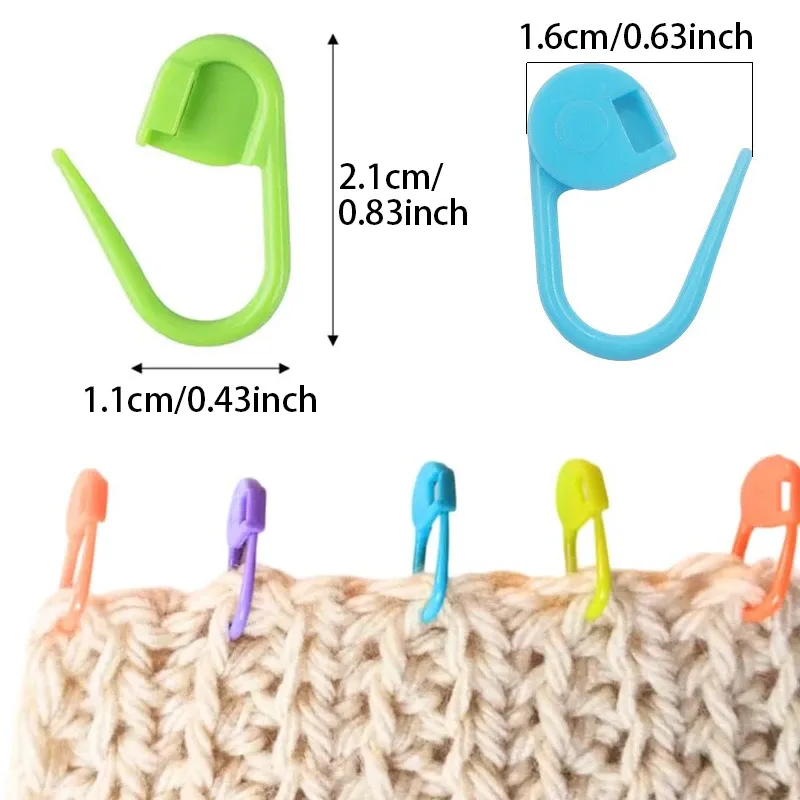
Whichever style you favor, placement technique matters more than brand — the full placement guide covers the details for knitting and crochet both.
Every marker style we could put on one table
| Style | Locks shut | Snag risk | Weight on fine yarn | Typical price per marker |
|---|---|---|---|---|
| Molded locking clip (this pack) | Yes | Low | Negligible | ~$0.30 |
| Metal bulb pin | Yes | Low | Noticeable on lace | ~$0.40-0.60 |
| Coil safety pin | Yes | High — the coil | Noticeable | ~$0.10 |
| Split ring | No | Medium — the split edge | Light | ~$0.15 |
| Closed ring | n/a — needle only | Low | Light | ~$0.20 |
| Enamel charm on lobster clasp | Yes | Low | Noticeable on lace | ~$2-3 |
Prices are typical US craft-retail ranges as of July 2026, rounded; our own two products land at $0.30 (this pack) and $2.14-3.00 per marker (charm sets, depending on motif and bundle).
What the ratings say about the clasp
ratings below 4 stars across the full history of this product
— Verified buyer ratings, complete export of 121, 2026
of the 121 verified ratings are 5 stars (111 of 121)
— Verified buyer ratings, 2026
Americans know how to knit, crochet or craft with yarn
— Craft Yarn Council, 2022
Our stress check: we opened and closed a single marker from this pack fifty times in a row, then locked it into a strand of fingering yarn and tugged. The clasp still seated with a click and held the strand. Flexible plastic bends where rigid plastic snaps — at this size, flex is the more durable engineering choice.
Locking marker questions
What is the difference between locking and removable markers?
Every locking marker is removable, but not every removable marker locks. Split rings, for example, slide in and out freely — removable, but they can also fall out on their own. A locking marker has a clasp that snaps shut, so removal only happens when you decide it does.
Are these the same as bulb pins?
They do the same job. "Bulb pin" usually refers to the metal safety-pin style with a bulb-shaped head and no coil. Our markers are the molded plastic version of the same idea: an open-and-lock clip with no coil to catch yarn, lighter than metal, in 50 colors instead of one.
Will the clasp wear out with repeated opening?
The plastic is flexible by design — the clasp flexes and springs back rather than fatiguing at a hinge point. One verified buyer describes them as "flexible plastic, not sturdy one", which is accurate: they give under pressure instead of cracking. Across 121 verified ratings, none reported broken clasps.
Can I leave a locking marker in a finished project?
You can — they are smooth and light enough to stay in blocking, and many knitters leave markers in seaming positions until the seam is sewn. For permanent marking in a gift or garment, most people switch to a scrap of yarn; markers are made to be reclaimed for the next cast-on.
Why plastic instead of metal?
Weight and yarn safety. Metal pins can pull a fine stitch out of shape, and coiled metal pins snag plies. Molded plastic weighs under a gram, has no coil, and cannot rust or leave marks in pale yarn — a real consideration if a marker sits in white wool for a month.
Do you sell prettier ones?
We do. The enamel charm sets — cats, daisies, starfish, pearl shells on gold lobster clasps — are the dressed-up version of the same locking idea. Different budget, same principle: nothing marks fabric reliably unless it locks.
Related: the 50-pack · row counter · buyer reviews · what are stitch markers?